
Why gutters break down in Hoover
A few things about homes in and around Hoover make certain repairs come up again and again:
- Severe spring weather. Central Alabama sits in one of the most active severe-storm regions in the country. High winds, hail and falling limbs dent gutters, snap hangers and tear outlets loose, often all at once across a neighborhood.
- Heavy, wet debris. Pine straw and oak leaves hold water like a sponge. A packed gutter can weigh several times what an empty one does, and that load works fasteners loose over time.
- Aging installations. Much of Riverchase, Bluff Park and the older parts of Vestavia Hills was built between the 1950s and the 1980s. Many of those homes still hang gutters on spikes and ferrules, a method that loosens with every hot summer and cold snap.
- Tall downhill eaves. On a house built into a slope, the back gutter can be three stories up. Nobody looks at it closely, so a small leak there can run for years.
Common gutter repairs
Gutters sagging or pulling away
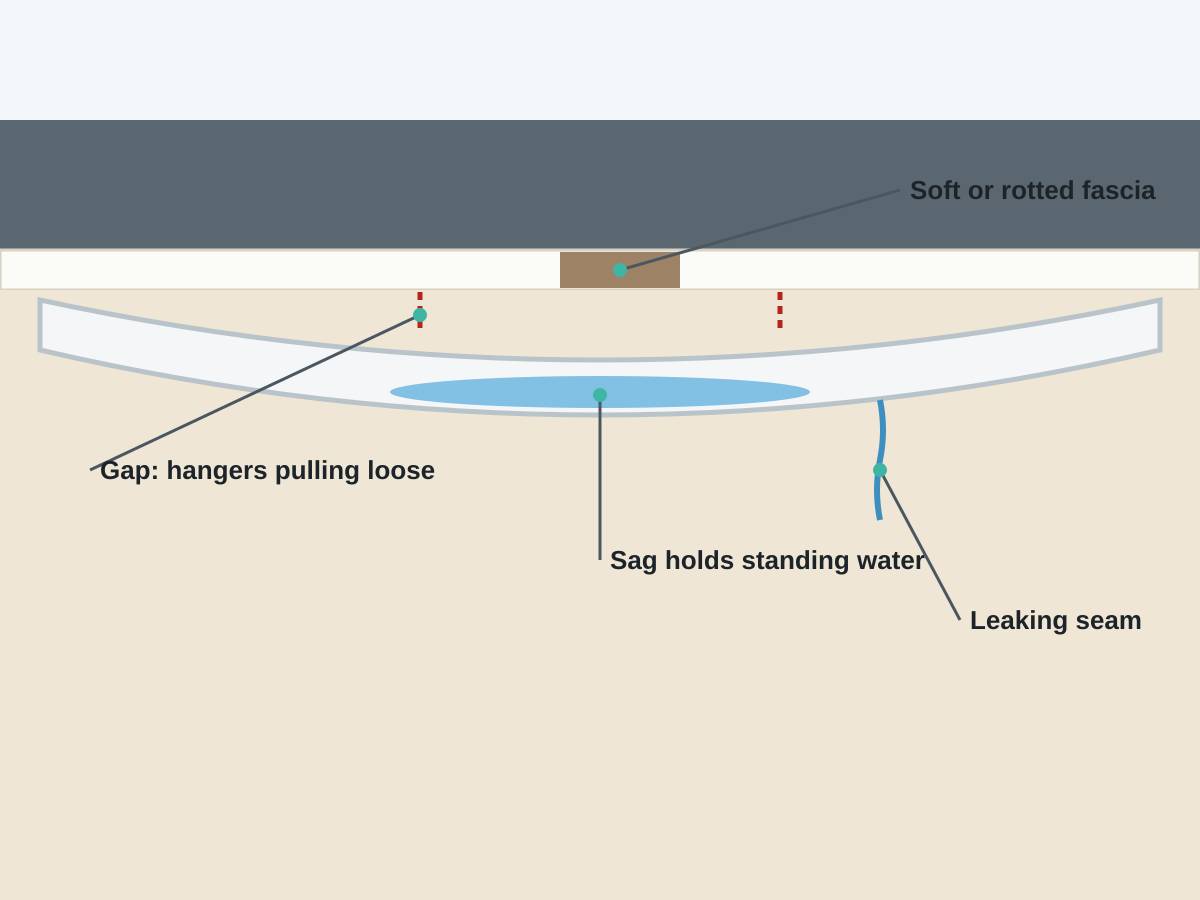
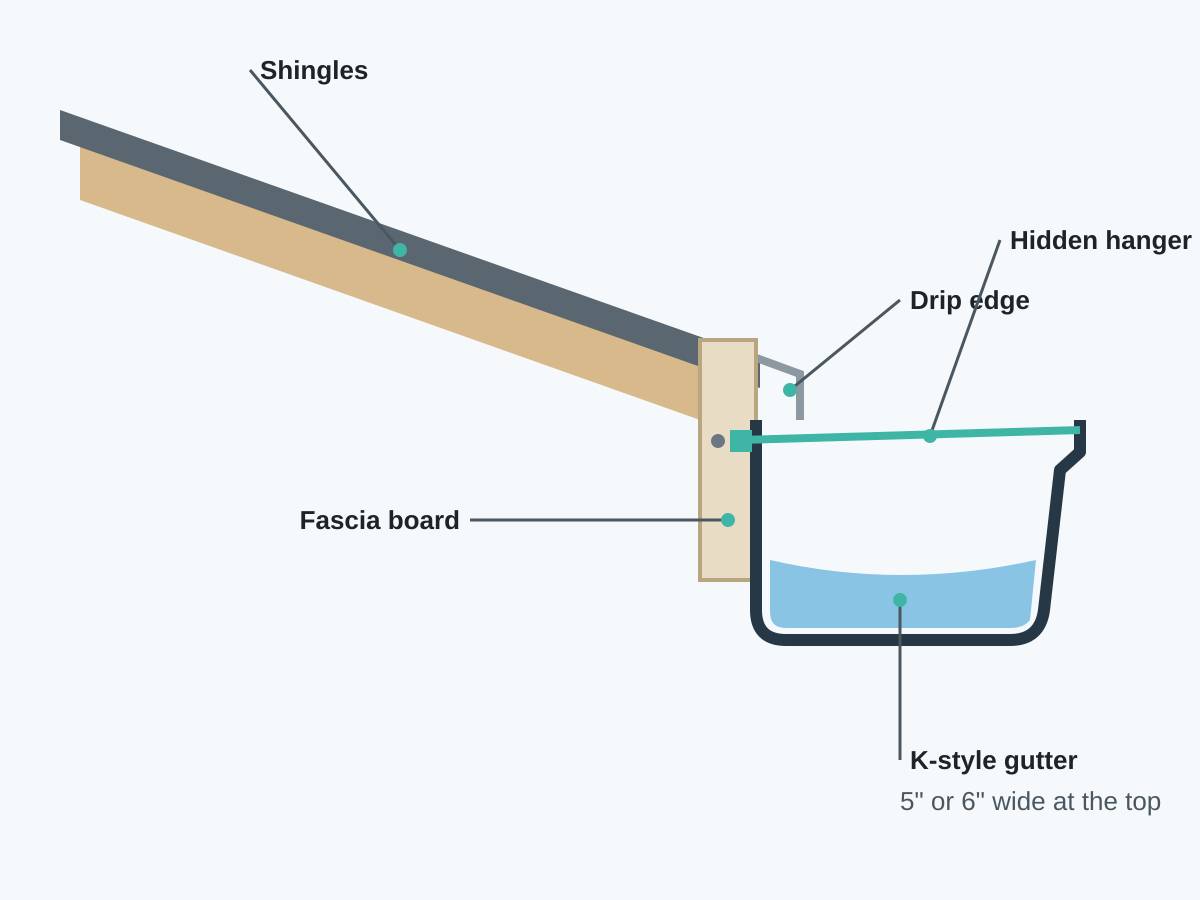
A gap between the gutter and the house means the fasteners have lost their grip. The standard fix is to replace old spikes with hidden hangers screwed into solid wood, spaced closely enough to hold a full load of wet debris and water. If the fascia behind has gone soft, it has to be repaired first, or new screws will pull out just like the old spikes. Read more in why gutters pull away from the house.
Standing water and lost slope
Gutters should fall gently toward each downspout. When a stretch flattens or dips, water and shingle grit sit there, the extra weight deepens the dip, and the metal at the low spot starts to corrode. The repair is to release the run, reset the slope and add hangers where it sagged. After years of standing water, check the low point for pinholes.
Leaking corners, seams and end caps
Even seamless gutters have joints at the corners and ends, and the sealant there dries out in the Alabama sun. A lasting fix means scraping out the old sealant, cleaning and drying the metal, and resealing from inside the gutter. A new bead smeared over dirty, damp sealant usually fails within a season.
Hail and storm damage
Hail can dent thin aluminum, and a falling limb can crush a section or rip it off the fascia. Dented but intact gutters still work; crushed or torn sections are usually spliced or replaced. If the storm also damaged the roof, the gutter repair is often part of the same insurance claim, so photograph everything before it is fixed. Our after-the-storm gutter checklist walks through it.
Loose outlets and downspouts
When an outlet pulls loose or a downspout elbow separates, a whole run's water drops down the wall and into the clay beside the foundation. Reattaching is quick. If the downspout or the pipe it feeds is clogged, see downspout cleaning and repair.
What to do before the pro arrives
- Stay off the ladder near a hanging gutter. A loose section is heavier than it looks and can swing. On a two-story or basement-side eave, leave it entirely to a professional.
- Watch it in the rain from the ground. Note where water spills, drips or runs behind. A short phone video helps the pro a lot.
- Get water away from the house with a temporary extension if a downspout has come apart.
- Book the repair before the next round of storms or the fall leaf drop.
What a repair visit usually looks like
- Clean the affected runs so slope, seams and outlets can actually be seen.
- Inspect the whole run: hangers, fascia, joints, outlets and slope, not just the obvious spot.
- Show you what they found, ideally in photos, and agree on the price before doing more.
- Make the repair: re-hang, re-slope, reseal or splice.
- Water-test it to confirm it drains to the downspout without drips.
When repair stops making sense
Repair is the right answer when the metal is sound and the problems are limited. It stops being good value when:
- The same runs need fixing year after year
- Leaks and sags show up on most sides of the house
- The gutters overflow in ordinary storms even when clean, which usually means they are too small
- Much of the fascia needs replacing, so the gutters have to come off anyway
In those cases, compare the numbers on seamless gutter replacement.
What drives the price of a gutter repair
- The type of repair: resealing a corner is small; re-hanging a long run is larger
- Height and access: a front eave over a flat lawn is easier than a three-story back over a slope
- The wood behind the gutter: rotted fascia has to be fixed first
- Matching materials: finding the same profile and color for a splice
- Timing: doing it with a cleaning often costs less than a separate trip
The cost guide explains these factors in more detail. For a free estimate on your home, call (205) 973‑4758.
Questions worth asking the pro
- What is causing the problem, and can I see photos?
- Is the fascia sound enough to take new screws?
- What hangers will you use, and how far apart?
- Will you check the other runs while you are up there?
- Will this repair last, or would you replace this section?
- What liability insurance covers work this high off the ground? Ask for a certificate.
Get a gutter repair estimate
Call soon if a gutter is hanging, water is pouring beside the foundation, or you see stains and soft wood behind the gutter. High eaves, steep roofs and basement-side elevations are jobs for a professional. Tell us what is happening and we'll connect you with an experienced, qualified local pro who works in Hoover.